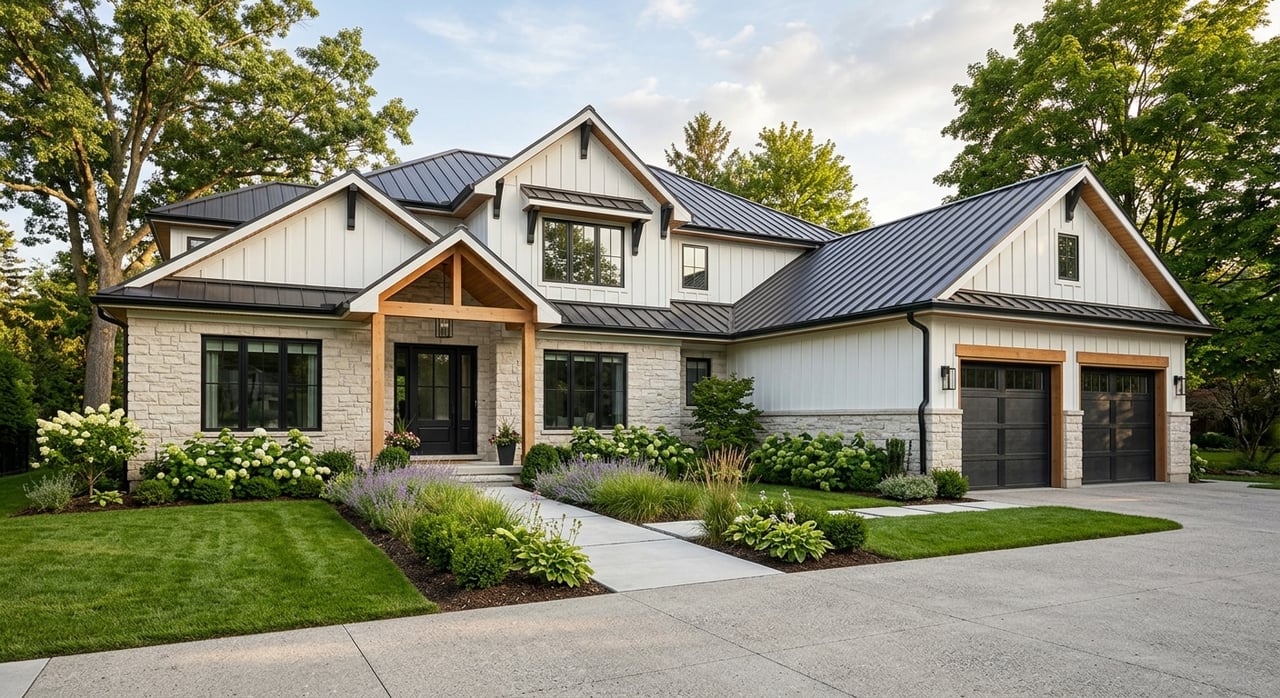
Are you trying to decide between a newer master-planned community and an established neighborhood in Overland Park? It is a smart question, because this choice affects your daily routine, your maintenance responsibilities, and how your neighborhood feels over time. If you understand how Overland Park neighborhoods are typically structured, you can narrow your search faster and make a more confident move. Let’s dive in.
How Overland Park Shapes the Choice
In Overland Park, this decision is often less about new versus old and more about coordinated development versus established character. The city’s planning framework treats many suburban neighborhoods as single-family homes within planned subdivisions, while its Neighborhood Conservation Program focuses on neighborhoods without HOAs north of 127th Street.
That matters because many buyers assume established neighborhoods have fewer rules and newer neighborhoods have all the oversight. In reality, both types can have structure. The difference is usually how much of that structure comes from an HOA versus city standards and resident organization.
The city also requires residents to maintain homes and properties to code. In other words, even if you buy in an established neighborhood, city maintenance rules still apply. An HOA may simply add another layer of standards on top of those city requirements.
What Master-Planned Living Often Looks Like
Master-planned communities in Overland Park usually package amenities, open space, and neighborhood rules in a more coordinated way. If you want a neighborhood with a clearly defined layout and shared features, this type of community may stand out.
Chapel Hill is a strong local example. Its HOA describes it as one of Overland Park’s largest master-planned developments, with 558 homes, about 70 acres of open space, around 2.5 miles of walking paths, 30% common ground, and clubhouse and pool amenities.
Its location next to Heritage Park adds another layer of appeal for some buyers. That nearby public park includes trails, a lake, golf, disc golf, and an off-leash dog park. For many buyers, this creates a blend of private neighborhood amenities and easy access to larger public recreation.
Woodmyre offers a slightly different version of the same idea. It includes 85 homesites, wooded and cul-de-sac lots, plus amenities such as a pool, pavilion, pickleball court, practice soccer field, basketball court, playground, walking trails, and common-area lawn care.
Meridian expands the concept beyond a traditional single-family neighborhood. It is planned across 200 acres and includes walkable restaurants and shops, a golf club, office and hotel components, and a 45-acre publicly accessible central park planned to connect to about 150 miles of trails. In Overland Park, that means master-planned living can range from a residential community to a broader live-work-play district.
What Established Neighborhoods Often Offer
Established neighborhoods in Overland Park tend to attract buyers who value mature landscaping, more variation in home style, and a streetscape that feels less newly packaged. These areas can still have HOAs, but they often deliver a different day-to-day experience.
Pinehurst is a helpful example. The subdivision was first platted in 1962, and its HOA formed in 1965. The association highlights mature trees and spacious properties, which are features many buyers look for when they want an older neighborhood feel.
Harwycke, established in 1987, emphasizes established homes, mature landscaping, tree-lined streets, distinctive architecture, and a private park. It also uses an architecture-control process for exterior projects, which is an important reminder that established does not always mean unrestricted.
Highcroft adds another useful comparison point. It is a 44-acre subdivision with 143 single-family homes built in the mid-1980s, and its HOA describes lots of trees, long-time residents, and a formal structure that includes budgets, meeting documents, and architectural change requests.
The takeaway is simple: established neighborhoods in Overland Park often mean older lots and more mature surroundings, not necessarily fewer rules. If you want flexibility, you still need to review the documents for the specific address.
Amenities: Private Package or Public Network?
One of the biggest trade-offs is how you want recreation and shared space to work in your life. Master-planned communities often centralize private amenities inside the neighborhood, such as pools, trails, clubhouses, playgrounds, and open green space.
Established neighborhoods are more likely to depend on Overland Park’s public park and trail system. The city says it has more than 80 parks and open spaces, and its Indian Creek and Tomahawk Creek trail system connects parks, neighborhoods, schools, and recreation facilities.
For some buyers, that public-network model is a real advantage. You may prefer access to city parks and trails without paying for a large private amenity package. Others want the convenience and predictability of neighborhood amenities that are maintained through HOA dues.
Maintenance and Rules Matter More Than Age
Many buyers focus first on the look of a neighborhood, but the better question is often how the neighborhood operates. The city’s property maintenance code applies throughout Overland Park, but HOA communities can add approvals, restrictions, and additional costs.
For example, Harwycke requires architectural approval for items such as fencing, landscaping changes, additions, and exterior paint colors. Chapel Hill emphasizes enforcement of covenants and rules. Some newer communities also include maintenance-provided housing types or common-area lawn care.
That trade-off can work in your favor if you want less day-to-day upkeep. At the same time, it usually means more oversight and dues-driven obligations. If you value autonomy, you will want to look closely at how strict the rules are before you fall in love with the home itself.
Lot Feel and Streetscape Differences
The physical feel of a neighborhood can shape your satisfaction just as much as the house. In Overland Park, local examples suggest that master-planned communities are often intentionally composed around open space, cul-de-sacs, and mapped lot selection.
Established neighborhoods often show more mature tree canopy, larger or more individual-feeling yards, and greater variation from one property to the next. That is not a city rule, but it is a useful local pattern when you are comparing options.
If curb appeal and landscaping maturity are high on your list, established areas may feel more comfortable from day one. If you prefer a more unified streetscape and a newer amenity package, master-planned living may be a better match.
Questions to Ask Before You Decide
No matter which direction you lean, the most important answers are found at the address level. A beautiful entrance, attractive lot, or strong first impression will not tell you everything you need to know.
Before you move forward, ask questions like these:
- What does the HOA actually maintain: only common ground, or also lawns, snow removal, private streets, or exterior components?
- Are the neighborhood’s pools, trails, and parks private to residents, or are they nearby public amenities maintained by the city?
- How strict are the architectural rules for paint colors, fences, additions, vehicles, and outdoor storage?
- If the neighborhood has no HOA, is it located within the city’s Neighborhood Conservation Program area north of 127th Street?
These details affect both your monthly costs and your long-term comfort. They also help you compare two homes more fairly, even when they look similar on paper.
Which Option Fits Your Priorities?
If you want coordinated amenities, shared open space, and a more uniform neighborhood environment, a master-planned community may be the better fit. This option can be especially appealing if you value convenience and do not mind a stronger HOA presence.
If you are drawn to mature trees, established lots, and a neighborhood with more visual variety, an established area may feel more like home. Just remember that older neighborhoods can still have active HOAs and architectural controls.
In Overland Park, there is no one-size-fits-all answer. The best choice usually comes down to the exact property, the HOA documents, the maintenance scope, the lot position, and whether you prefer private amenities or the city’s public park and trail network.
If you want help comparing Overland Park neighborhoods at the property level, Trent Gallagher-ReeceNichols can help you evaluate the trade-offs clearly and find the right fit for your goals.
FAQs
What is a master-planned community in Overland Park?
- A master-planned community in Overland Park usually offers coordinated development, shared open space, HOA oversight, and amenities such as pools, trails, clubhouses, or playgrounds.
What is an established neighborhood in Overland Park?
- An established neighborhood in Overland Park typically offers older lots, mature trees, and more variation in homes and streetscape, though it may still have an HOA and architectural rules.
Do established Overland Park neighborhoods have HOAs?
- Yes, some established Overland Park neighborhoods have active HOAs, budgets, boards, and approval processes for exterior changes.
Are city property maintenance rules different from HOA rules in Overland Park?
- Yes, city property maintenance rules apply throughout Overland Park, while HOA rules can add more specific standards, approvals, and obligations within a neighborhood.
Are parks and trails in Overland Park only inside master-planned communities?
- No, Overland Park also has a broad public system with more than 80 parks and open spaces, plus trail connections such as the Indian Creek and Tomahawk Creek system.
What should you review before buying in an Overland Park HOA community?
- You should review what the HOA maintains, what amenities are private or public, how strict the architectural rules are, and what dues-related responsibilities come with the property.
