What is a Kansas home seller legally required to tell you before you sign?
Less than most buyers assume. Kansas has never written a mandatory disclosure form into state law. There is no statute requiring a seller to fill out a specific document listing every known defect. What exists instead is a patchwork: a couple of narrow statutory requirements, a strong body of common law that punishes sellers who lie on paperwork they voluntarily provide, and a regional custom so consistent that it functions like a law even though it technically isn't one. Nearly every seller in Johnson County fills out a Seller's Property Disclosure Statement anyway, because skipping it looks worse than any answer they could put on it.
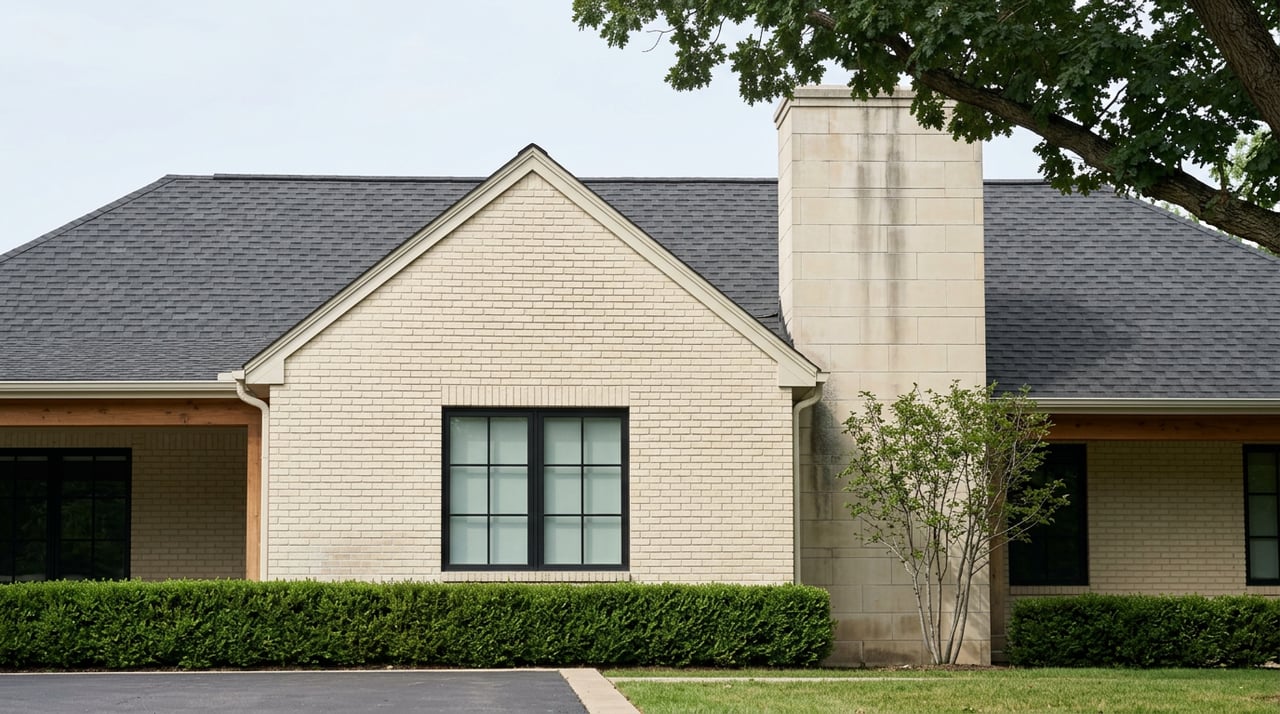
That distinction matters more in Prairie Village than in most Kansas City suburbs, because of one number: the median home here was built in 1959. Roughly 2.6 percent of the housing stock predates 1940, and another 8.7 percent went up by 1949, but the overwhelming majority of Prairie Village homes were framed in the postwar boom that followed. A home built in 1959 is now old enough that its original mechanical systems are not just dated, they're at the tail end of their functional life. That single fact changes what a disclosure form can and can't tell you, and it changes what you actually need to check before you write an offer.
The paperwork is custom, not code
Kansas law does specifically require two things on a residential disclosure: sellers must tell you about any special assessments tied to the property, including an approximate dollar amount owed, and they must disclose any known elevated radon concentrations, a requirement written directly into the purchase contract language. The Kansas Department of Health and Environment recommends every buyer get an independent radon test regardless of what the disclosure says, since a clean form only reflects what the seller knew, not what a meter would find.
Federal law adds a separate layer for anything built before 1978: the seller has to hand over the EPA's lead paint pamphlet, disclose any known lead hazards, and give you a ten-day window to test before you're locked in. Since a 1959 build predates that cutoff by nearly two decades, this isn't a hypothetical for most Prairie Village listings, it's a checkbox that applies by default.
Beyond those two carve-outs, Kansas leaves disclosure to common law and custom. Real estate licensees have their own statutory duty to pass along any adverse material fact they actually know, but the law is explicit that an agent has no obligation to independently inspect the property or verify anything the seller says. The regional Seller's Disclosure and Condition of Property Addendum used across the Kansas City market spells this out in its own language: it's the seller's knowledge as of the date signed, not a substitute for inspection, and not a warranty. That combination, a form that isn't legally mandatory but is functionally universal, paired with a disclaimer that it isn't a warranty, is why buyers who treat the form as their safety net are relying on something weaker than it looks.
What 1959 buys you underground
If the paperwork can't be your only line of defense, the inspection has to do more work, and in Prairie Village that starts below the slab. Homes from this era commonly carry cast iron drain lines and galvanized supply pipe, both of which corrode from the inside over a 65 to 75 year service window. A 1959 build sits right inside that range now. Clay tile sewer laterals were standard practice before 1960, and they're brittle enough that root intrusion at the joints is a routine finding rather than a rare one.
None of that shows up on a walkthrough. A sewer scope, a camera run down the lateral line, is the only reliable way to see it, and the cost runs in the low hundreds of dollars against a repair that can run into five figures if a lateral has already collapsed. For a home this age, a scope isn't an upsell your inspector is pitching. It's closer to a smoke detector: cheap, fast, and the kind of thing you regret skipping only once.
The electrical picture tells a similar story. Homes built in the late 1950s sit in what electricians call the gray zone: some runs were done with early grounded cable, but cloth-covered wiring and knob-and-tube remnants show up often enough in unrenovated sections that an inspector opening a wall panel treats it as expected, not surprising. Two-prong outlets without a ground wire behind them are a common tell, and a seller swapping them for modern-looking three-prong outlets without actually adding a ground is a documented pattern inspectors are trained to catch.
The material nobody photographs
The other layer specific to this era is what's inside the walls and under the floors rather than behind them. Asbestos was used widely in 9x9 floor tile, pipe wrap, duct insulation, and some siding products through roughly 1980, which covers the entire span of Prairie Village's core building years. None of this is dangerous sitting still. The cost only appears the moment someone disturbs it, whether that's a buyer pulling up old tile or a contractor opening a wall for a kitchen remodel. A hundred-dollar finding during a pre-renovation test becomes a five-figure abatement job if the material gets disturbed first and tested second.
This is the part of the 1959 build year that a listing photo can never convey, and it's also the part a seller's disclosure genuinely can't help with unless the seller happens to have had testing done. Kansas's common law duty covers what the seller knows, not what a lab would find. If you're buying a home here with renovation plans, the practical move is testing before the sledgehammer, not after.
The friction the disclosure form was never built to cover
There's a second kind of risk in Prairie Village that has nothing to do with the house you're buying and everything to do with the one next door, and it isn't the seller's job to mention it because it isn't their defect. The city has been in an active stretch of teardown-rebuild construction for years: single-family permits ran 51 in 2020, 64 in 2021, 71 in 2022, then 50 in 2023 and 45 in 2024, and the city itself has said most of those single-family permits are teardown and rebuild projects rather than additions to existing homes. If you buy an original 1959 home on a desirable block, there's a real chance a rebuild starts on the lot beside you within a few years of closing.
The friction that creates is loud, literally. In the summer of 2025, the Prairie Village City Council responded to a wave of resident complaints about construction noise tied to these projects. Between January 1 and July 6 of that year, the city logged 24 noise complaints and issued warnings in 21 of them, according to city documents reported by the Johnson County Post. Starting July 7, the city moved from warnings to active ticketing of the top permit holders, and the complaint count dropped to four by early August. The council then voted 10 to 1 to require construction sites to post separate signage listing allowed hours and a phone number for violations, a measure Councilmember Inga Selders opposed only because she wanted stricter limits, not looser ones. Her earlier motion for tighter construction hour restrictions had failed 9 to 2. Under the noise ordinance the city was enforcing that summer, the May 15 through September 15 window allows construction noise from 7 a.m. to 8 p.m. on weekdays and 8 a.m. to 8 p.m. on weekends including federal holidays, with narrower hours the rest of the year.
None of that will appear on a disclosure form, because it isn't a defect in the home you're buying. It's a defect in the assumption that a quiet block stays quiet. If you're touring a home near a visibly aging block of originals, asking whether any adjacent lots have pending demolition or building permits is a reasonable question for your agent to run down at the city, not something you should expect the seller across the street to volunteer.
What this means for your offer
None of this is a reason to avoid Prairie Village. It's a reason to sequence your due diligence correctly. Order the sewer scope early rather than as an afterthought, since a collapsed lateral changes your repair budget more than almost any cosmetic finding will. Ask specifically about asbestos-era materials if you're planning any renovation, and test before you disturb anything rather than after. Treat the disclosure form as a starting conversation with the seller, not a warranty, since Kansas law explicitly says it isn't one. And if you're buying next to an older, untouched home on a desirable block, it's worth a call to the city to see whether a rebuild is already in the pipeline.
A few questions worth asking directly
Does Kansas require a home inspection before closing? No. Inspections are standard practice and almost always written into the purchase contract as a contingency, but the state doesn't mandate one. The seller's disclosure and your own inspection are two separate things, and only one of them is optional.
If my seller didn't know about a sewer or wiring issue, are they still liable? Generally no. Kansas common law centers the seller's duty on what they actually knew, not what a professional inspection would have found. That's exactly why the diligence has to come from your side of the transaction.
Will a seller tell me if a neighboring lot has a pending teardown? Not necessarily, and they aren't obligated to since it isn't a defect in their own property. A quick check with the city's permit records is the more reliable path if it matters to you.
Buying or selling an original Prairie Village home comes with more moving parts than the listing photos suggest, and that's exactly where a second set of eyes pays for itself. If you're weighing an offer on a home from this era, or thinking about what a rebuild might mean for a lot you already own, I'm happy to walk through what I'm seeing in the market right now. Trent Gallagher — Request Your Complimentary Home Valuation.
