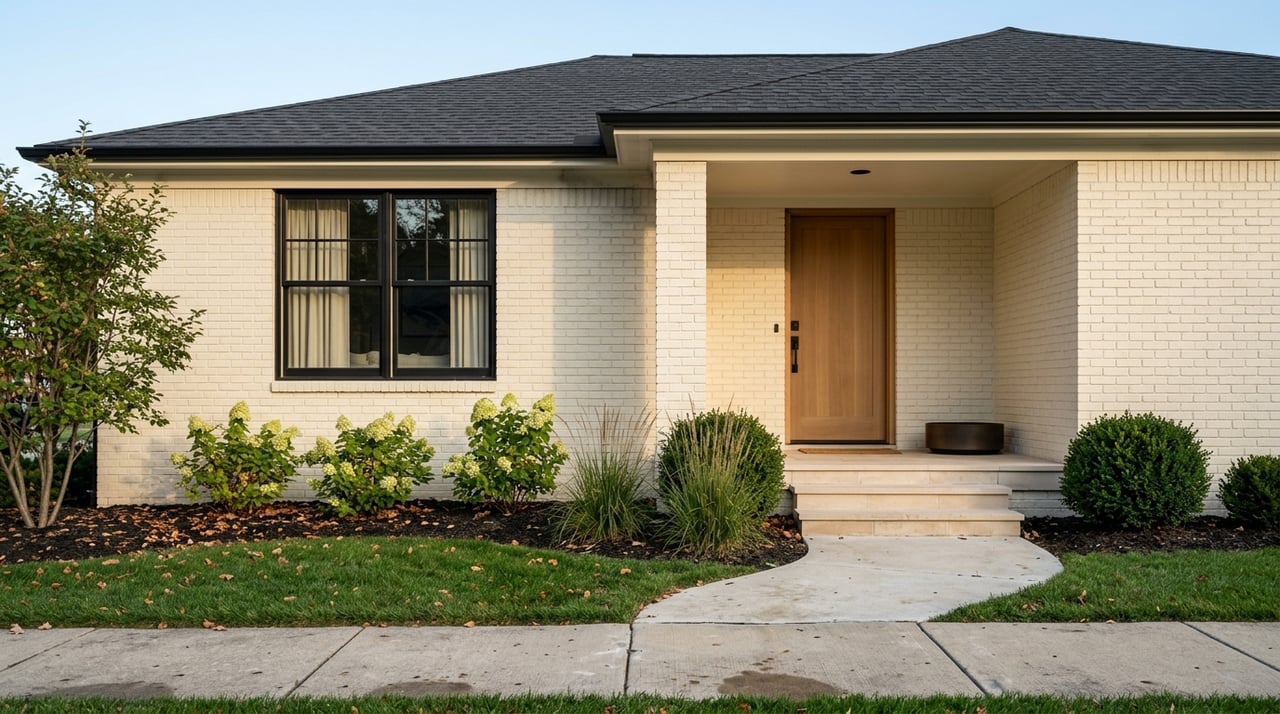
Wondering whether a classic Prairie Village home or new construction is the better fit for your next move? It is a smart question, because in Prairie Village, you are often choosing between established charm and updated convenience on the same block or within the same pocket of the city. If you understand how age, lot size, neighborhood pattern, and local rules shape that decision, you can buy with more confidence. Let’s dive in.
Why This Choice Matters in Prairie Village
Prairie Village has a very specific housing story. The city profile reports that about 95% of its housing is detached single-family homes, and a large share of that housing was built before 1955. That means many buyers here are not comparing one subdivision of similar homes to another. They are comparing older homes with established character to rebuilt or recently constructed homes with modern systems.
That contrast is part of what makes Prairie Village appealing. The city is compact and landlocked, so vacant land for detached homes is limited. As a result, change tends to happen one house at a time through renovation, teardown, and rebuild activity rather than through large-scale new subdivisions.
What Counts as a Classic Prairie Village Home
In Prairie Village, a “classic” home is usually shorthand for an older detached house such as a ranch, conventional home, bungalow, or another mid-century style. Ranch homes make up 48% of the city’s housing stock, with conventional homes at 36% and split-levels at 12%, according to the city profile. In practical terms, that means many buyers are looking at homes with familiar Prairie Village scale and long-established streetscapes.
The appeal is often less about a formal architectural label and more about the setting. Mature trees, consistent home spacing, and settled blocks give many older areas a sense of continuity. Prairie Village also places clear value on its tree canopy, noting nearly 35,000 trees citywide and emphasizing the role of street trees in neighborhood character and adjacent property value.
Why Buyers Love Classic Homes
A classic Prairie Village home often gives you a setting that is hard to recreate from scratch. Many of these homes sit on streets where the scale feels cohesive, the landscaping is mature, and the visual rhythm of the block has developed over decades. If you value a home that feels rooted in its surroundings, that can be a major advantage.
Older homes may also offer a more uniform street presence. The city profile notes that redevelopment can change a block’s visual character through larger garages, more windows, and new materials. That means classic homes can feel more historically layered and consistent, while updated homes may feel more individualized.
For buyers who want to personalize over time, a classic home can also create room for strategic improvements. In Prairie Village, reinvestment often happens house by house, so you are stepping into a market where thoughtful renovation is already part of the local pattern. If you are comfortable improving systems and finishes over time, an older home may offer the right foundation.
The Trade-Offs of Buying Older
The biggest trade-off is maintenance and rehabilitation. Prairie Village says aging housing in established subdivisions requires some level of maintenance or rehabilitation, and its housing policy connects housing age and condition to reinvestment needs. In other words, the charm is real, but so is the work.
For many buyers, the likely renovation scope goes beyond cosmetic updates. Local city and county resources point to insulation, air sealing, windows, HVAC, plumbing, electrical, and exterior rehabilitation as common pressure points in older homes. That does not mean every classic home needs all of that work, but it does mean you should evaluate older homes with a realistic eye.
Energy performance is another factor. The U.S. Department of Energy says many older homes have less insulation than homes built today and recommends checking insulation, air sealing, windows, duct sealing, and HVAC systems. DOE also notes that heat gain and loss through windows account for 25% to 30% of residential heating and cooling energy use, and air leakage can account for 30% or more of heating and cooling costs.
What New Construction Offers
New or recently rebuilt homes in Prairie Village usually appeal to buyers who want modern layouts, newer systems, and fewer immediate repair needs. If you prefer open living spaces, updated insulation, newer windows, and more current HVAC performance, new construction can feel simpler from day one. That convenience is often the main draw.
There has also been meaningful reinvestment in Prairie Village. The city profile reports $61 million in residential investment over five years, reconstruction of more than 150 detached homes, and 173 new homes since 2012. So while Prairie Village is known for its established housing stock, newer homes are clearly part of the current market.
Energy efficiency is one of the clearest practical advantages. ENERGY STAR says certified new homes exceed minimum code by at least 10% and are independently verified for features such as insulation, windows, air sealing, and HVAC performance. For a buyer thinking about monthly operating costs and fewer early projects, that can be a strong reason to lean newer.
The Limits of New Construction in Prairie Village
New construction in Prairie Village is not the same as buying in a brand-new suburban development. Because the city is already built out, most new homes must fit into existing lot patterns and neighborhood context. That local reality matters when you compare expectations to what is actually possible.
The zoning code helps explain that fit. About 45% of platted lots in Prairie Village are 65 feet wide or less. R-1A lots require a minimum width of 80 feet and 10,000 square feet, while R-1B lots require a minimum width of 60 feet and 6,000 square feet.
Both zoning districts also cap building coverage at 30% and impervious surface coverage at 40%, with additional setback and height limits. Those rules affect how much house can sit on a lot and how much room remains for driveways, patios, and other hard surfaces. So even when a home is new, it is still shaped by lot size, district rules, and neighborhood compatibility.
How Much Room Is There to Expand?
If expansion potential is part of your decision, lot width and zoning matter as much as the home itself. In Prairie Village, the answer depends heavily on whether a property is in R-1A or R-1B and how the lot is platted. A house that looks modest today may still have limited room for a large addition if coverage, setbacks, or impervious-surface limits are already close to the cap.
This issue affects older homes and rebuilds alike. The city applies impervious-surface rules to new residential structures, teardowns and rebuilds, and remodels that add more than 200 square feet or remove more than 10% of the existing footprint. If you are buying with future plans in mind, you want to understand the lot before assuming you can build out.
As a broad local pattern, Prairie Village describes neighborhoods north of 83rd Street as primarily traditional, narrow-lot single-family areas, while areas south of 83rd Street are primarily suburban, large-lot single-family neighborhoods. That does not replace property-specific due diligence, but it is a useful framework when you start comparing locations within the city.
How Prairie Village Protects Neighborhood Character
Prairie Village is not choosing between old and new as much as it is balancing preservation, reinvestment, and fit. The city’s housing policy says single-family areas remain the strength of Prairie Village neighborhoods. It also says the city is not considering multi-family development in those single-family areas.
The city also emphasizes preserving neighborhood integrity, and its tree canopy plays a role in that effort. Mature street trees are treated as part of neighborhood character, especially in established subdivisions. That means the feeling of a block comes not just from the homes themselves, but also from the landscape around them.
For newer construction, the city’s current housing policy says the council wants updated neighborhood design guidelines for smaller R-1B lots so teardown and rebuild projects fit existing neighborhoods better. That is important for buyers who want something newer without losing the surrounding scale and rhythm that make Prairie Village attractive.
What If You Are Considering a Teardown or Rebuild?
If you are buying with the goal of eventually rebuilding, Prairie Village has a process worth understanding. The city notifies registered homes associations when permit applications are filed to demolish a residential structure, increase interior square footage, or alter the footprint. It also provides public notice materials for teardowns and rebuilds.
That does not mean redevelopment is discouraged. It means redevelopment is part of a public process that recognizes neighborhood context. If you are weighing a lot for future building potential, it is smart to look at both the house and the rules that come with changing it.
Renovation Help for Older Homes
One advantage of buying an older Prairie Village home is that local programs recognize renovation as part of the city’s housing story. Prairie Village offers a Residential Exterior Grant and a Residential Sustainability Grant for eligible owner-occupied homes, each with matching funds and a 2025 appraised-value cap of $450,000. The sustainability grant requires energy improvements that meet the 2021 International Energy Conservation Code or better, and insulation-only projects can qualify for a 50% match.
Johnson County’s HOME program also focuses on health and safety, accessibility, weatherization, and lead-paint correction while inspecting major systems such as the roof, foundation, windows, and furnace. Prairie Village also points residents to MARC remodeling loans for upgrades and additions. For buyers open to an older home, these programs reinforce that reinvestment is not unusual here. It is part of how many homes evolve.
Which Option Is Better for You?
A classic Prairie Village home may be the better fit if you value mature trees, established blocks, original scale, and the chance to improve a home over time. You may also prefer the look and feel of older ranches, conventional homes, and bungalows that reflect the city’s long-established housing fabric. In many cases, you are choosing character first and planning for updates second.
New construction or a rebuilt home may be the better fit if you want modern systems, newer energy performance, and fewer near-term repair projects. You may also want a more current layout and finishes without taking on a major renovation plan after closing. In that case, you are often prioritizing convenience, efficiency, and turnkey living.
In Prairie Village, neither choice is automatically better. The right answer depends on how you weigh character, maintenance, expansion potential, energy efficiency, and neighborhood fit. A strong buying strategy starts with knowing which trade-offs matter most to you.
If you want help comparing a classic Prairie Village home to a rebuild, I can help you look beyond finishes and focus on the details that affect value, future flexibility, and day-to-day ownership. Connect with Trent Gallagher-ReeceNichols for clear, local guidance tailored to your move.
FAQs
What is considered a classic home in Prairie Village?
- In Prairie Village, a classic home usually refers to an older detached house such as a ranch, conventional home, bungalow, or similar mid-century style rather than an official architectural category.
Are most homes in Prairie Village older homes or new construction?
- Most homes in Prairie Village are older detached single-family homes, and the city reports that a significant amount of housing was built before 1955.
Do new homes in Prairie Village have more energy efficiency than older homes?
- New homes often have an energy-efficiency advantage because newer construction typically includes better insulation, air sealing, windows, and HVAC performance, while older homes may need upgrades in those areas.
Can you expand an older home in Prairie Village?
- Possibly, but expansion depends on lot width, zoning district, setbacks, building coverage, and impervious-surface limits, so each property needs to be evaluated individually.
How does Prairie Village manage teardowns and rebuilds?
- Prairie Village uses zoning and permit processes, public notice materials, and notifications to registered homes associations to help teardown and rebuild projects fit surrounding neighborhoods.
Which parts of Prairie Village feel more traditional versus larger-lot?
- As a broad pattern, Prairie Village describes neighborhoods north of 83rd Street as primarily traditional narrow-lot single-family areas and neighborhoods south of 83rd Street as primarily large-lot single-family areas.
