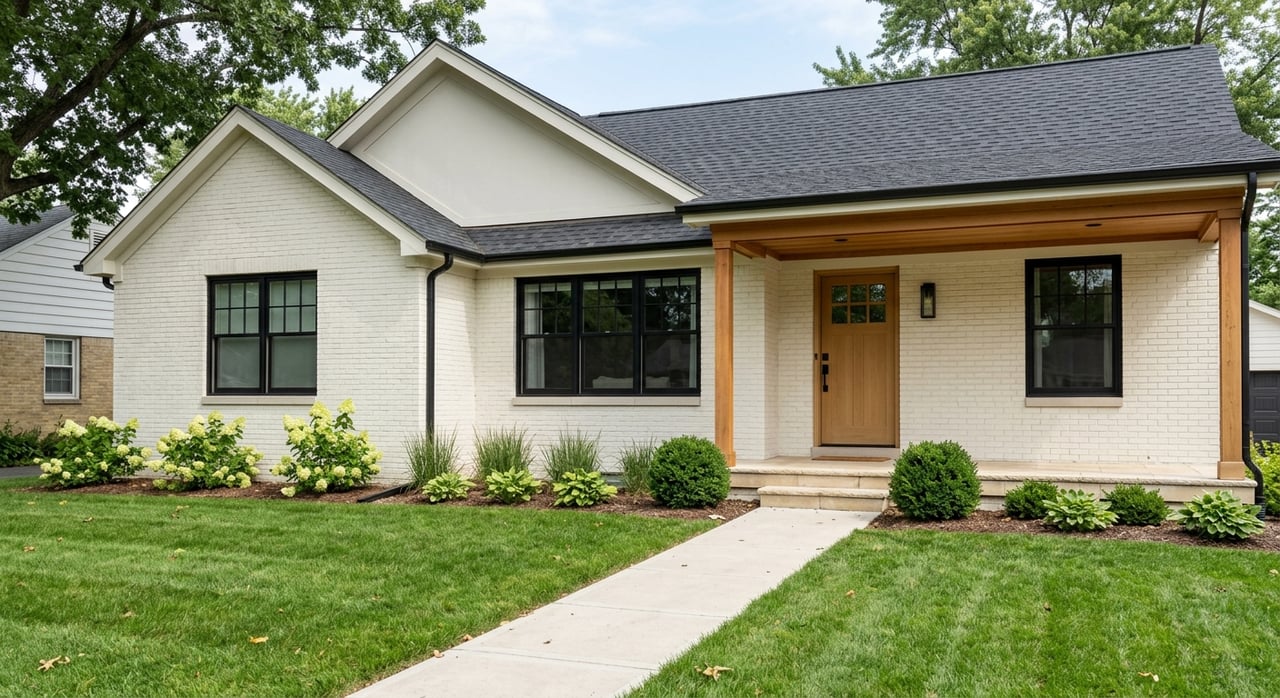
If you are selling in Prairie Village, your price is not just a number. It is your opening move, and in a fast market, it can shape the entire outcome. Whether you own a charming cottage or a high-end custom home, understanding how buyers compare homes in Prairie Village can help you price with more confidence and better strategy. Let’s dive in.
Why pricing looks different in Prairie Village
Prairie Village is a small, close-in Johnson County suburb with about 21,700 residents across 6.7 square miles. Even in a compact market, pricing can vary widely based on the type of data you are looking at and the type of home you own.
Recent market snapshots point to strong demand. Zillow’s March 31, 2026 home value index placed the average home value at $488,597, while Redfin reported a March 2026 median sale price of $553,500 and a median sale price per square foot of $281. Realtor.com reported a median listing price of $602,475, which reflects active listings rather than closed sales.
Those numbers tell an important story. Prairie Village has a broad price range, and sellers need to know where their home fits before choosing a list price. A citywide average can provide context, but it should never be the only tool used to price your home.
Why day-one pricing matters
Prairie Village moves quickly. Redfin reported average days on market of 10 and noted that many homes receive multiple offers, with average homes selling about 2% above list and hot homes selling about 6% above list. Zillow also showed homes going pending in around 3 days.
That kind of speed means the first week matters most. If your home is priced well from the start, you are more likely to attract the strongest early interest, generate better showing activity, and create leverage in negotiations.
If your price is too aggressive, you can miss that first wave of buyers. In a market this competitive, that can be costly because buyers often watch new listings closely and move fast when they believe a home is priced in line with the market.
Cottage pricing needs a micro-market lens
Smaller homes and cottages in Prairie Village do not all compete in the same way. Two homes with similar square footage can price differently because buyers are comparing more than size.
The city’s housing patterns help explain why. Prairie Village includes traditional neighborhoods generally north of 83rd Street, suburban neighborhoods generally south of 83rd Street, and village areas near commercial nodes. Common home types include ranch, split level, two-story, and Cape Cod, and each can appeal to a different buyer depending on the block, lot, and layout.
What buyers notice in cottage homes
For compact homes, buyers tend to weigh several factors together:
- Block character
- Lot size and usability
- Interior condition
- Layout efficiency
- Update level
- Curb appeal
A smaller home that feels polished, functional, and well-positioned on its lot may outperform another home with similar square footage. In Prairie Village, pricing strategy works best when you compare homes in the same micro-area and in a similar condition tier.
Closed sales show the lower range clearly
Recent closed sales show how the lower end of the market can cluster while still leaving room for meaningful differences. Examples include 2512 W 77th St at $319,950, 5607 W 75th Ter at $350,000, and 7631 Windsor St at $395,000.
These sales suggest that compact cottages and smaller homes can still move well when the market accepts the condition and presentation. They also show why a seller should not rely on a citywide median alone when pricing a cottage home.
Mid-market homes depend on more than size
Prairie Village pricing is not a simple dollars-per-square-foot exercise. In the middle of the market, renovation quality, usable layout, and lot appeal can push similar homes into different pricing bands.
Recent sales support that point. Homes like 7409 Ash St and 4808 W 81st St both closed at $499,000, yet they offered different bedroom counts, bath counts, and square footage. Buyers are often reacting to how a home lives, not just how large it is.
Features that can shift value
In upper-midmarket pricing, the details often matter:
- Kitchen and bath updates
- Main-level flow
- Finished living space
- Storage and garage utility
- Outdoor living appeal
- Overall design consistency
If your home has thoughtful improvements and a layout that feels easy to use, that can help support a stronger price. If the home needs cosmetic work or has a less flexible floor plan, pricing may need to reflect that clearly from the start.
Luxury homes play by different rules
At the top of the Prairie Village market, citywide averages become even less useful. Luxury buyers are often evaluating a much narrower group of homes, and they tend to compare architecture, lot size, privacy, finish quality, and overall rarity.
That is why luxury pricing should rely on a tighter, more selective comp set. A premier property should be measured against other premier properties, not against the city median sale price.
Closed sales show the luxury spread
Recent upper-end sales make the gap clear. Examples include 7905 Fontana St at $895,000, 7438 Village Dr at $1,425,000, and 5100 W 68th St at $4,300,000.
The sale at 5100 W 68th St is especially useful for understanding luxury pricing. It reported $711 per square foot, far above the citywide median of $281 per square foot, and featured a nearly one-acre lot, pool, 4-car garage, and high-end custom finishes. That kind of premium is possible when a property offers features and scale that are difficult to replicate.
Why luxury comps must stay narrow
For a luxury listing, broad market averages can pull you in the wrong direction. Buyers in this segment are usually not deciding between a custom home on a premier lot and a typical citywide option. They are comparing a short list of rare homes with specific location and design characteristics.
In Prairie Village, neighborhood context matters here too. The city notes that new residential structures and major additions on R-1A and R-1B properties must comply with neighborhood design guidelines, and that can influence how buyers perceive fit, curb appeal, and long-term value.
Neighborhood context affects value
Prairie Village has a long planning history, and that local context shapes pricing more than many sellers realize. Construction began in 1941, and the city has long been known for its planned neighborhood patterns and varied housing types.
That means your home is judged both on its own merits and on how it fits its surroundings. Buyers notice when a home feels well matched to the street, lot, and scale of nearby properties.
What that means for your list price
A smart price reflects both the home and the setting. That includes:
- The character of the immediate block
- Whether the lot feels more typical or more premium
- How the exterior fits neighborhood expectations
- The quality of additions or renovations
- How your home compares to recent nearby sales
This is one reason two similar homes a few streets apart can land at different prices. In Prairie Village, overlapping submarkets are real, and your exact location can change buyer perception.
A practical pricing strategy for sellers
If you are preparing to list, the goal is not simply to choose a high number and hope for the best. The goal is to position your home where buyers see value quickly and respond early.
For cottage and mid-market homes, that usually means focusing on recent closed sales nearby with similar condition, layout, and lot appeal. For luxury homes, it means building a tighter comp set around rare properties with similar scale, architecture, and amenities.
Questions to ask before setting the price
Before your home goes live, ask:
- Which recent closed sales truly match my home?
- How does my lot compare to nearby homes?
- Are my finishes average, updated, or premium for Prairie Village?
- Does my home compete on speed, presentation, or rarity?
- Will buyers see the price as an opportunity in the first week?
These questions help you move from guesswork to strategy. In a market where homes can go pending in days, clarity matters.
Presentation and pricing work together
Price and presentation are closely connected. Buyers do not evaluate your list price in a vacuum. They evaluate it based on the photos, condition, curb appeal, and overall impression your home creates.
That is especially true in Prairie Village, where homes range from modest cottages to custom luxury properties. The stronger the presentation, the easier it is for buyers to understand your price and compete with confidence.
For higher-value listings, this is where thoughtful staging, polished marketing, and precise pricing can work together. When your home looks aligned with its price point from the first showing, you put yourself in a stronger position.
The bottom line for Prairie Village sellers
Prairie Village is a fast-moving market, but it is not a one-size-fits-all market. Cottage homes, mid-market homes, and luxury properties each require a different pricing lens, and the right strategy starts with understanding your home’s exact place within the local market.
The best list price is not based on a headline number for the whole city. It is based on the right comps, the right neighborhood context, and the right first impression. If you want to maximize interest and protect your negotiating position, pricing right from day one is one of the most important decisions you will make.
If you are thinking about selling in Prairie Village and want a pricing strategy built around local nuance, premium presentation, and strong negotiation, connect with Trent Gallagher-ReeceNichols.
FAQs
How should you price a cottage home in Prairie Village?
- Start with recent closed sales in the same micro-area and similar condition tier, then adjust for lot, layout, updates, and curb appeal rather than relying on citywide averages alone.
Why can two similar Prairie Village homes have different prices?
- Buyers often weigh block character, lot usability, condition, update level, and layout, so homes with similar square footage can fall into different buyer pools and price bands.
How fast do homes move in Prairie Village?
- Recent market data shows Prairie Village can move quickly, with Redfin reporting average homes going pending in around 5 days and Zillow showing homes going pending in around 3 days.
How should you price a luxury home in Prairie Village?
- Use a narrow comp set of similarly rare homes with comparable location, lot size, architecture, privacy, and custom features rather than using the city’s median sale price as your guide.
Why is the first list price so important in Prairie Village?
- Because the market is competitive and moves fast, the right day-one price can drive early showings, stronger offers, and better negotiating leverage during the first week on market.
